Showing posts with label photographs. Show all posts

Saturday, August 4, 2012

Various garden pictures from spring and summer

I have a few things that I could write about, but I'm not a very good writer so I keep putting it off.  In the meantime, may I present some photos of my "semi-wild" garden from over the past few months.


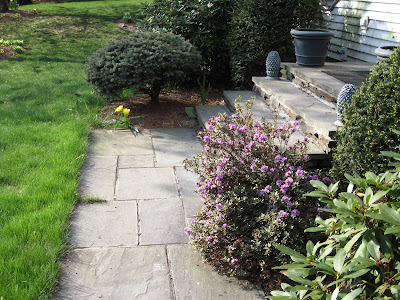
 The path from my driveway up towards the door.


 Daylilies and hosta blooming, early July.


 Closeup of wildflowers - I think that these are Daisy fleabane (Erigeron annuus).


 Berry on a honeysuckle bush, with a small insect just to the left.


 Lilac flowers in May.


 My entire lilac bush in bloom.


 Seeds developing on a Red Maple in May.


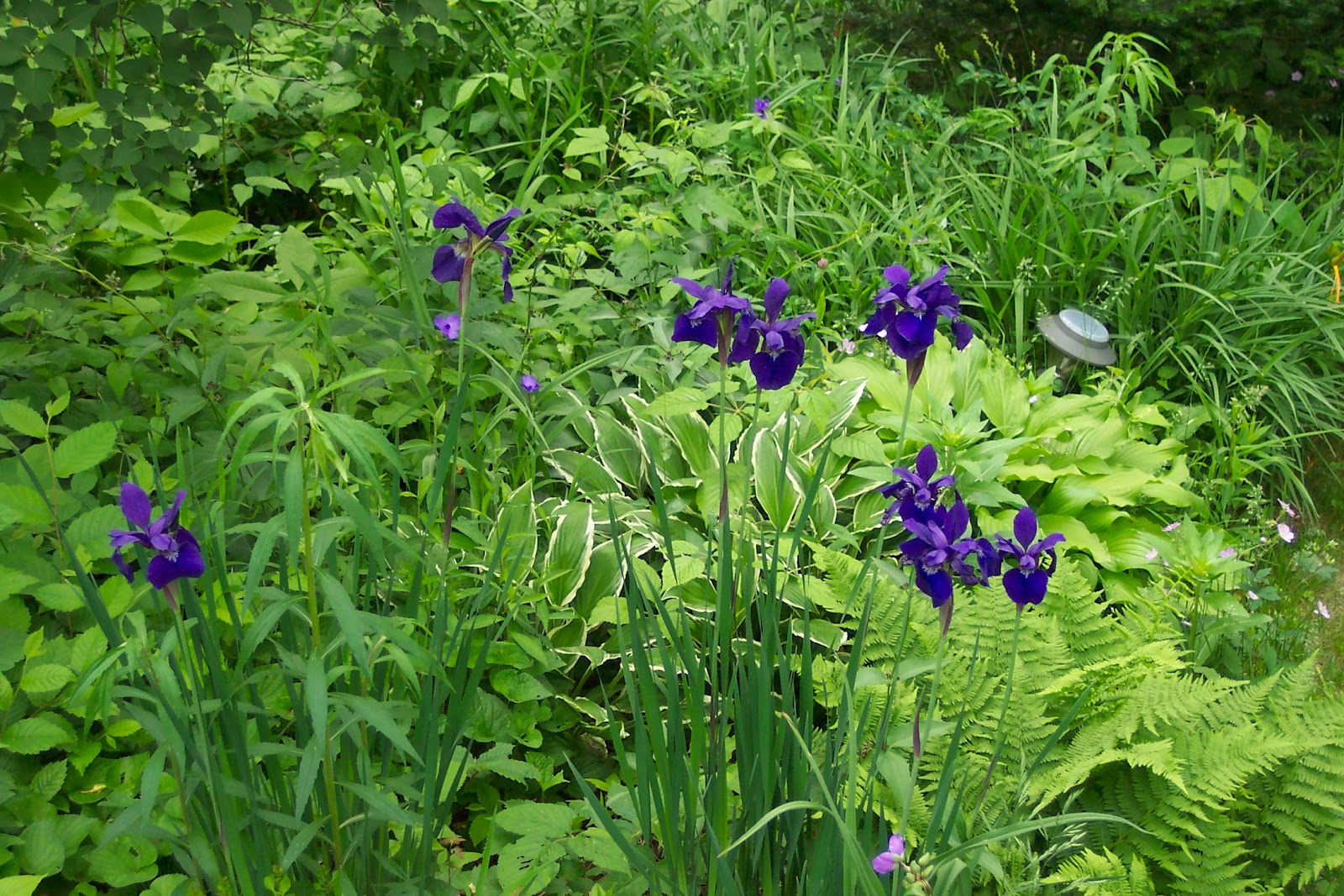
 Siberian Iris


Pink geraniums and forget-me-nots


 Closeup of an unknown variety of iris


 Spiderwort (Tradescentia)


 Yellow irises (unknown variety) next to my driveway


A closeup of one of the yellow irises

Saturday, March 5, 2011

Trees and sky

My new home has many virtues, but dramatic sunset vistas that make for good photographs are not among them.  Instead, my house is surrounded by other houses and trees, which is entirely typical of New England.  In this part of the country, being able to look at landscapes that are many miles distant from one's own home is more of a privilege than a standard feature.

Nonetheless, there are a few good views that I've been able to get over the past few weeks:


Thursday, December 30, 2010

Holiday plant and photos from a walk


A few pictures that I took yesterday:
 An indoor tropical plant (I don't know the name), decked out in appropriate
holiday season colors.

 An old beech tree that I saw along a walk, with a little plaque.  This type gets
purple leaves in the summer, and is very nice.  Unfortunately, they don't seem to 
be planted very much these days, possibly because grass won't grow underneath them.

 Random forest scene.


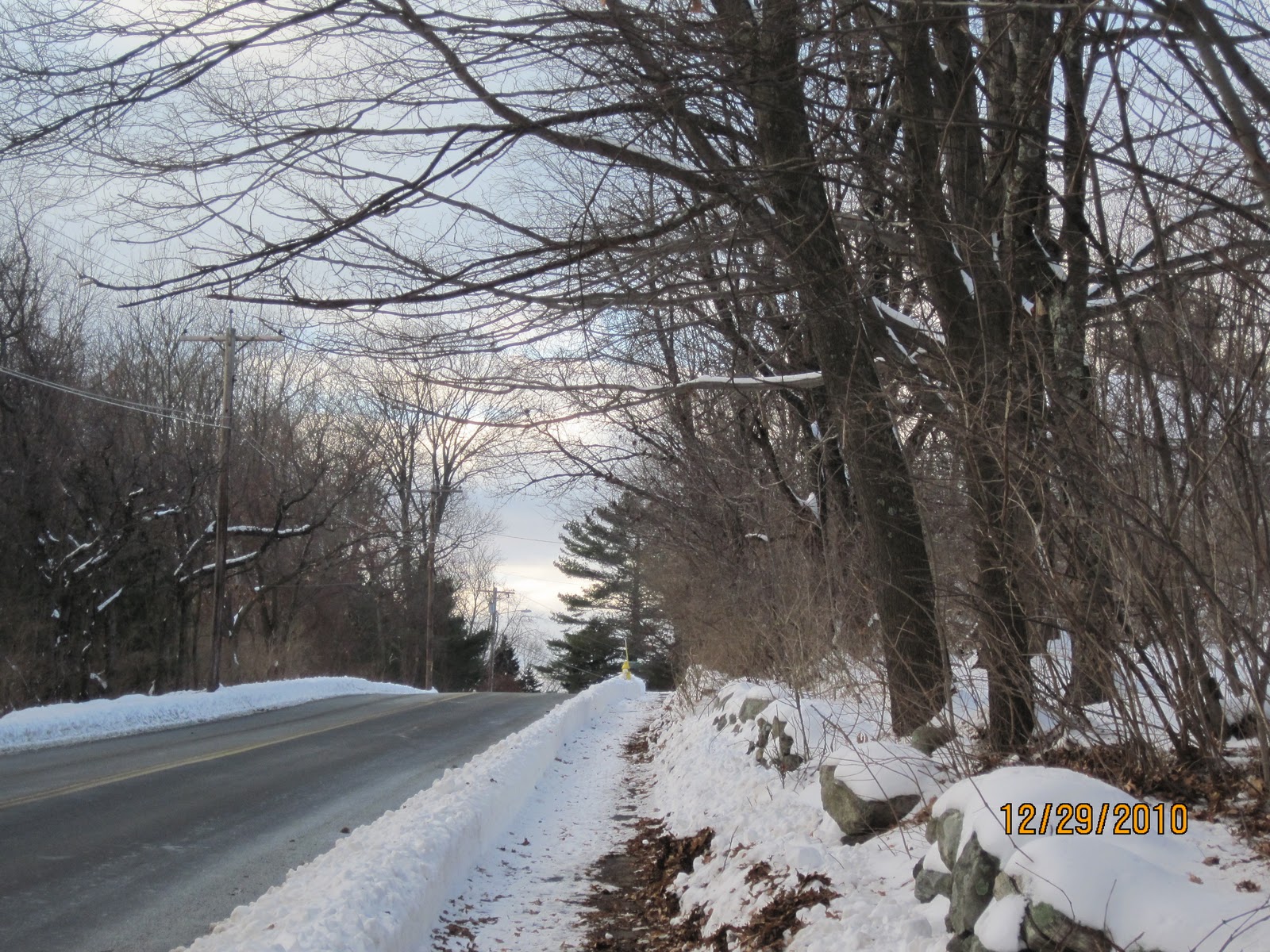
Random roadside scene.


Two pictures at Dad's house, where I spent most of my childhood 
(and some of my adulthood).  The first is a view from the driveway,
the second is a view of the house itself later in the afternoon, just before sunset.

Tuesday, November 30, 2010

Random Garden Photos


Hmm, it's still three weeks to the start of winter proper, and I'm already suffering from "plant withdrawal" enough to want to post more and more garden pics.  Here are three more or less random ones -


Clump of Zagreb Coriopsis - a lovely cushion of yellow color (while it lasts).

Saturday, November 27, 2010

Moods of the sky ...

One thing I love about where I live is that there is a field behind the house, which is near the top of a hill. There is a great view to the west, which is a contrast to the situation of most houses in this area. Most houses either look onto a patch of woods, or into another house and yard the next street over. Over time, the sky has many different "moods".


Dramatic and contrasting:


Somber and gray, but with a bit of a lighter side:

Bright and cheerful:


A flash of light through the gloom:


Murky and mysterious:


A calm but colorful finale:

Monday, June 14, 2010

Yet more garden photos


One of these days, I'll make a post that requires more thought, but for now, more garden photos will have to so ...

Here you can make out yellow Coreopsis in bloom in the center, and several foxgloves
with their long spikes of purple flowers above then and further from the camera


A self-seeded Rose Campion (Lychnis coronaria) with small magenta-colored flowers
is growing on what should be the walkway to the left of center near the bottom of the picture. I decided not to pull it up because I have a general policy of not removing nice flowers that are kind enough to grow without even being deliberately planted.


Self-seeded foxgloves (Digitalis purpurea, I think)


Hostas with a Japanese painted fern kind of squashed between them


Common Milkweed (Asclepius syriaca) - another self-seeded plant, and a native. As the name implies, it is generally considered a weed, but IMHO it's a pretty and not-terribly-aggressive one that is conveniently filling in a spot that was bare before, so I decided that it's welcome. Behind it is a large clump of Oregano - first planted a decade ago by mom as a source of fresh spices, it quickly spread far beyond our puny needs for cooking, and now there are probably 15 clumps of it growing in various parts of the flower beds, which need to be partly torn out every year of two to prevent them from pushing out neighboring plants. It stays from a combination of my inertia and the fact that the flowers, while tiny, attract lots of insects, including butterflies and occasionally some odd orange and iridescent blue-colored hornets that I have never seen near any other flower in the garden.

Monday, May 10, 2010

Wild turkey

As I was eating breakfast this morning, I saw a wild turkey in the backyard right outside the window, less than 10 feet away. By the time I got my camera, it was further away but I managed to get a couple of good photos:

I'm pretty sure this was a female - the males are considerably larger and have more reddish skin on their head and neck. They can fly, but only do so when they really have to, preferring to walk around. They often travel in groups, but this one was solitary.

Twenty years ago, wild turkeys were very rare in this part of Massachusetts, having been hunted or driven out by the 19th century. The first one in my town in more than 100 years was spotted 18 or 20 years ago. Now they are common enough that it's no surprise to see them, but this was still an unusually good opportunity to get a picture from pretty close up in good light - and from indoors, where my movement and noise wouldn't drive the bird away quickly.

Tuesday, April 27, 2010

Garden views and greenery

Should this thing be called "Offhand comments from a frustrated gardener"? Sorry if I'm posting too much about the garden, but springtime sometimes gets me thinking about gardening and plants and botany in both practical and abstract ways.

Now, more garden pictures. These are two views from similar angles taken about 2 weeks apart, showing the relatively rapid growth and "greening" at this time of year:


Here you can see, among other plants, some of the hostas unfolding their leaves, and the Ostrich fern uncoiling its fronds. (The Ostrich fern was planted in a single spot 5 years ago. It's a "colony plant" that spreads through underground runners, and each year appears in one or two places where it didn't the year before.)


Another flower bed - this one has, among other plants, irisis, astilbe, peonies, spirea, echinacea (purple coneflowers), onions, daisies, rose campion, poppies, and sedum. Hardly any of these plants flower really early in the growing season, so it will be another 3 weeks to a month before this part of the garden starts to break out in lots of color. (The only things flowering here are a single pink hyacinth on the left, and a few pale blue phlox above and a little to the right of the hyacinth.)

Back to a part of the garden that has more early spring flowering action going on - Dicentra spectabilis bleeding hearts in full bloom, along with two different varieties of tulip:


In this next picture, the low lying blue flowers are anemones, which have already been flowering for almost 3 weeks. Above them, an azalea bush is about to start bursting out lots of bright magenta-pink flowers, while at the bottom the white candytuft (Iberis sempervirens) is also starting to flower. Little green sprouts of lily-of-the-valley are coming up around everything, and to the right that the ground is carpeted by the aptly named "grey-leafed, self-spreading plant whose name I can never remember"

There's always a major hazard when you don't put any kind of edging material between a garden bed and the lawn. Most lawn grasses will happily spread into the garden, especially because the mulched, composted, fertilized soil in the garden is probably more fertile than the soil under the lawn itself. If you have a low-growing groundcover plant at the edge of the flower bed, it's almost impossible to pull the spreading grass out without ripping out the plant you want to keep. What you can end up with is this:
in which the grass has pretty much taken over a chunk of what used to be part of the flower garden, and the actual garden plant (whose name, again, I can't remember - you can see bits of its greyish foliage peeking through the grass) is gradually being crowded out and choked by the faster-growing grass. I can only see two options - dig up everything and replant, or concede that this area is now part of the lawn again and start mowing it as part of the lawn, which will quickly finish off the last bits of the other plant.


Grass tends to spread more aggressively than most of my garden plants, but occasionally there is a problem going the other way. For example, here the Ostrich fern and a lamium with nice pink flowers both demonstrate a total lack of concern for my arbitrary boundary between flower garden and lawn:

The back of the yard, with the "waste area" between the stone wall and a fence. This has always been a very convenient place to dump clippings, weeds, small fallen branches, etc, and has saved countless trips to a landfill with yard waste over the years. After almost 3 decades of being dumped on like this, the soil is incredibly fertile in this strip - both weeds and "overflow" plants transplanted from the flower beds grow at least as well in the "waste area" as in the formal parts of the garden. Unfortunately, invasive Oriental Bittersweet and native but most unwelcome poison ivy are always creeping in from the other side of the chain-link fence, where I can never get rid of them. Cutting them and other weeds back is a necessary chore at least once or twice per growing season, and preferably more. Without cutting much of the this area would become a tangled mass of weeds in 1 year, and all of it in less than two.

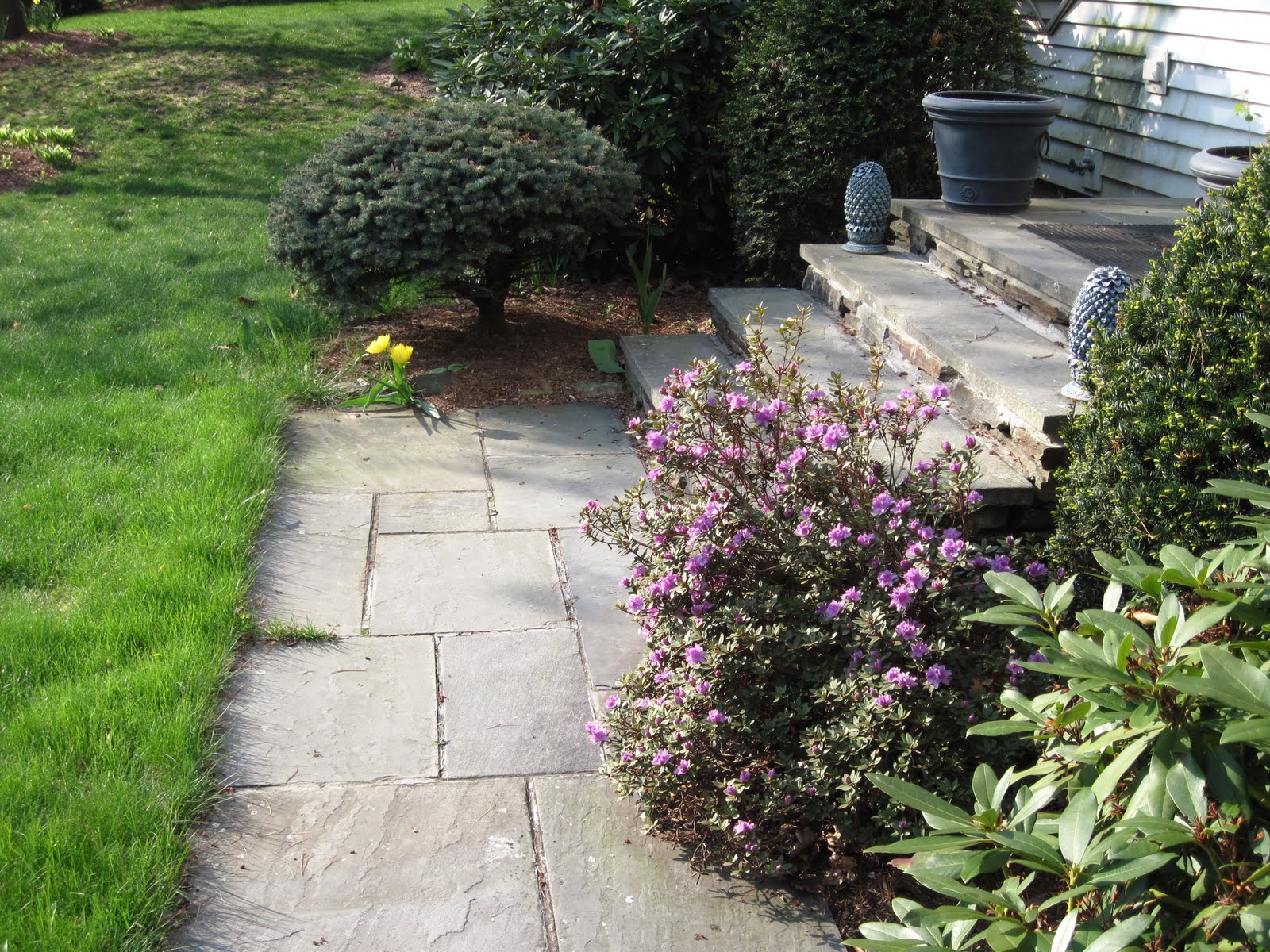
Finally, bushes and a couple of tulips along the front walkway. Oddly, the front yard has far fewer flowering perennials than the back and side yards, partly because it's smaller, partly because much of the available space is taken up by shrubs and small trees instead.