Combining my interest in history with botany, I have sometimes wondered what my area looked like when the earliest Europeans arrived - especially the plants. How were the plants different, and how were they similar? Well, based on reports from native and European sources, and scientific analysis of old pollen and plant remains, one can make some guesses.
Apart from the obvious lack of modern cities, highways, roads, housing subdivisions, shopping malls, etc., etc., one of the most striking differences would have been in the characteristics of the forests themselves. Much of the forest would have much larger trees than we are used to seeing in wooded areas today. There were large areas of forest that had never been cleared at all, truly old-growth forests that would be full of widely-spaced trees with trunks that were 3, 4, 5, or even 6 feet in diameter at the base, and 10 to 20 feet in circumference, trees that had reached this size because they were several hundred years old. There is very little forest like this left in New England today - almost every piece of land has been cleared or logged at least once in the last 300+ years. Almost all wooded areas today are much younger overall, ranging from forests of numerous young saplings 10 or 15 years old to those with much larger, older trees, perhaps 100 years old, that look impressive in size but which are actually still skinny youngsters compared to the massive, several-century old trees that were fairly common when the first Europeans came.
Of course, not all of the land was covered with old-growth forest. The American Indians in southern New England had been clearing land for agriculture for centuries, and there was quite a bit of second-growth forest in areas that they had once farmed but later left. They also kept some hunting areas clear of woods for many generations by repeatedly setting small fires that would kill young trees but leave grasses and other non-woody plants to grow back. Because of this controlled use of fire to create terrain more favorable for hunting, Europeans were sometimes surprised to find large open areas of fields, extending many miles, on land where they expected to find dense forest. The use of fire extended to the old-growth forests themselves. Small fires did no permanent damage to the older trees, but they helped to clear out vines and thorny shrubs and other undergrowth, which made tracking and chasing animals in the forests easier. Again, early Europeans sometimes remarked on how open the forest floor was in the old-growth forests. A man could easily ride on horseback along the forest floor, with little dense underbrush to impede him. One early English explorer in Virginia noted that in some areas, the spaces between the big old trees were large enough that one could have driven a full carriage with its team of horses right between the trees with no trouble! Not all of the wooded areas were this clear, however. In areas where there were fewer animals to hunt, such as steeper hills and mountains, or areas with poor soil or areas just not frequented by many animals, the Indians didn't practice their forest management through controlled burning, and the underbrush was much thicker and took some effort to penetrate.
The majority of the types of trees most common in forests were the same as today, but their proportions were different. Old growth forests, not surprisingly, tended to be dominated by the trees that had the longest lifespans, which usually meant various oaks, various pines, sugar maples, and beeches. Trees that are common in the relatively young forests found today, such as red maple, black cherry, and birches, were a lot less common. They would be found mainly in the second-growth patches where there had been Indian farms and towns, or major forest fires or storms had cleared an area of its old trees. They were also often found in areas where the more dominant tree types would not grow, like swamps and steep, rocky hillsides. One consequence of this was that the autumn foliage was probably not nearly as impressive, since the brightest colors - the reds and oranges and the most brilliant yellows - often come from maples, which were less common in the 17th century forests.
There was one tree that was quite common in these forests that is only occasionally seen anywhere today, and that was the American Chestnut. They were once common enough that many New England towns have a "Chestnut Street" along with an "Oak Street", "Maple Street", "Elm Street", "Pine Street", but the Chestnut Blight fungal disease killed virtually all of them in the early 20th century, and the only thing that kept some of them alive was their tendency to re-sprout from the roots after the main part of the aboveground tree has died. Elm trees have suffered a major blow from Dutch Elm disease at the same time, but they were not quite as common as Chestnuts before the diseases came, and Dutch Elm disease isn't quite as universally destructive as Chestnut Blight is.
Many of the other plants one could see at various times of the year would have been familiar to people today - wild grapevines and Virginia creeper climbing up trees, skunk cabbage poking through the ground in swamps before the snow is even gone, short-lived spring wildflowers blooming before the trees above them have grown their leaves in the early spring, milkweeds producing their seedpods full of seeds with feather-like tufts that allow the wind to catch them, goldenrods blooming in late summer, along with the much less welcome ragweed. There would, however, have been some very familiar plants that would be missing. Some of these missing plants wouldn't be missed very much, since they are notoriously invasive, fast spreading, and tough to kill. There would have been no clumps of Japanese Knotweed, no bittersweet vines climbing up trees, no purple loosestrife forming dense swathes in wetlands. Some less invasive, but very common weeds would also have been lacking. The best known of these is probably the common dandelion. Other common weeds seen today that would have been completely lacking at the time of the first Europeans would have been chenopodium, aka lamb's quarters or goosefoot, common plantain, shepherd's purse, and common mullein. Some common wildflowers would have been lacking as well, including Queen Anne's lace, common or ox-eye daisies, Chicory, and Black-eyed Susans. Almost all of these plants, whether considered weeds or wildflowers (or both), are originally from Europe and Asia, and were introduced to the eastern part of North America. The one exception is the Black-eyed Susan, which is native to the prairies of the midwest and was not brought east of the Appalachians until the 19th century.
There is a lot more stuff that I could add, but the short version is that the forests and fields of Massachusetts would have looked considerably different from today in the 16th or early 17th century, even apart from the obvious and blatant changes like clearing of forests, creation of farms and villages and towns, and later cities, factories, highways, malls, etc. Just the changes in how the forest was handled and used by the people living in the area, and the plants that were introduced, made major changes. Of course, there were many other changes to the environment caused by changes in the animal life, but that is a story that I don't have time for right now ....
Sunday, December 5, 2010


News, good and bad
The good news is that I have agreed on a price for a house of my own, one that is nice and only about 2 miles from where I work. The agreed price is $156,000, which is very reasonable in this part of Massachusetts even for a small house in a down market. I haven't talked much about my house-hunting, but it has been an interesting process, and there are still quite a few steps left. I am going to the inspection on Monday.
The bad news is that my grandmother's health is going further downhill. She is my father's mother, my one surviving grandparent, and is 94 years old. She lives down in Texas, about 100 miles southwest of Dallas and some 40 miles west of Waco, near my aunt, who visits her at least once every week. She often described me as her favorite grandchild, and we were pretty close as I was growing up. My father and I have visited her the last two Septembers for her birthday, and I still write to her from time to time. For the last year or so, however, her health has deteriorated. She sleeps a lot, has lost quite a bit of weight, and needs more assistance taking care of her everyday needs like getting dressed, etc. She has usually been unable to hold extended conversations, and sometimes gets very confused. She moved from an assisted living area into a more complete nursing home area of the same facility. Now she often completely forgets where she is, which is considerably worse than she was just this past September when I visited her. My aunt and the people at the nursing home both think that she sleeps so much at least partly to escape the confusion and anxiety that she feels because she can not remember where she is or what is going on. I feel somewhat guilty for not writing to her since earlier in November, although I believe that she mostly relies on my aunt to read my letters to her now, and may not always fully understand them.
Overall, her health and quality of life, which were not good even over a year ago, are tragically declining more and more. It happens to almost everyone eventually, but that does not make it any less painful or sad when it does happen.
The bad news is that my grandmother's health is going further downhill. She is my father's mother, my one surviving grandparent, and is 94 years old. She lives down in Texas, about 100 miles southwest of Dallas and some 40 miles west of Waco, near my aunt, who visits her at least once every week. She often described me as her favorite grandchild, and we were pretty close as I was growing up. My father and I have visited her the last two Septembers for her birthday, and I still write to her from time to time. For the last year or so, however, her health has deteriorated. She sleeps a lot, has lost quite a bit of weight, and needs more assistance taking care of her everyday needs like getting dressed, etc. She has usually been unable to hold extended conversations, and sometimes gets very confused. She moved from an assisted living area into a more complete nursing home area of the same facility. Now she often completely forgets where she is, which is considerably worse than she was just this past September when I visited her. My aunt and the people at the nursing home both think that she sleeps so much at least partly to escape the confusion and anxiety that she feels because she can not remember where she is or what is going on. I feel somewhat guilty for not writing to her since earlier in November, although I believe that she mostly relies on my aunt to read my letters to her now, and may not always fully understand them.
Overall, her health and quality of life, which were not good even over a year ago, are tragically declining more and more. It happens to almost everyone eventually, but that does not make it any less painful or sad when it does happen.
Tuesday, November 30, 2010
Random Garden Photos
Hmm, it's still three weeks to the start of winter proper, and I'm already suffering from "plant withdrawal" enough to want to post more and more garden pics. Here are three more or less random ones -


Clump of Zagreb Coriopsis - a lovely cushion of yellow color (while it lasts).
Saturday, November 27, 2010
Removing fences and flowering cacti: a random post
Clearing leaves and dead perennial foliate did not complete in the garden this year. There was also the question of the old wooden fence that my parents put up partway around an above-ground pool back when we were kids. The pool was long since taken down and replaced by more gardening space, but the fence remained. Over the last few years, it has been showing its age, so my father wanted to take it down.
 This is what we ended up with. The wooden pieces are gone, the
metal poles embedded in concrete bases that we dug out of the ground
are still here for the moment.
This is the garden area and part of the fence in the summer (the rest of the
fence bends back and is hidden behind the front part):
 Here's a more closeup view of the same area after we were finished taking
the fence down:
 The fence ran through the garden area in the lower part of the picture.
 This picture inserted for no good reason other than that I think
that as many posts as possible should have pictures taken just after sunset.
 Top-down view


 This is what we ended up with. The wooden pieces are gone, the
metal poles embedded in concrete bases that we dug out of the ground
are still here for the moment.
This is the garden area and part of the fence in the summer (the rest of the
fence bends back and is hidden behind the front part):
 Here's a more closeup view of the same area after we were finished taking
the fence down:
 The fence ran through the garden area in the lower part of the picture.
This shouldn't be much of a problem for the plants - only a couple of them were climbers, and we can get trellises for those. Almost all of them were basically sun rather than shade plants - the extra sun from the removed fence should help them or at least not hurt them.
 This picture inserted for no good reason other than that I think
that as many posts as possible should have pictures taken just after sunset.
Meanwhile, there are actually plants growing inside the house as well. They rarely get the attention that they deserve in this blog, but I couldn't ignore the Christmas cactus, which started blooming a little earlier than its name would suggest, but at the right general time of year.
 Top-down view
In my humble opinion, Christmas cacti have some of the most beautiful flowers around. They look incredible close up:


Moods of the sky ...
One thing I love about where I live is that there is a field behind the house, which is near the top of a hill. There is a great view to the west, which is a contrast to the situation of most houses in this area. Most houses either look onto a patch of woods, or into another house and yard the next street over. Over time, the sky has many different "moods".


Dramatic and contrasting:


Somber and gray, but with a bit of a lighter side:

Bright and cheerful:

A flash of light through the gloom:

Murky and mysterious:

A calm but colorful finale:

Friday, November 26, 2010
Turkeys and the "Columbian exchange"
When the group of English colonists commonly known as Pilgrims crossed the Atlantic, they brought domestic turkeys with them. When they reached what is now Massachusetts, they found wild birds of the same species living there. At the festival of the first Thanksgiving, they may well have eaten either, or both, wild and domestic turkeys.
The turkey is a native of North America only. Given this, how could European settlers have brought turkeys from Europe to North America? The answer is that turkeys had already been brought from North America to Europe in the sixteenth century. The Pilgrims were already used to eating a distinctly "American" food long before they left England or the Netherlands to come to Massachusetts.
There are several different subspecies or varieties of wild turkey in North America. The southernmost of these subspecies lives in central Mexico. It was the only variety that was domesticated. When the Spanish overran the great Mexica (Aztec) empire in Mexico, they learned about the local foods. Apparently they liked turkeys enough to bring them back to Spain not long after the conquest of Mexico. From Spain, they spread through many other parts of Europe by the end of the sixteenth century, including England.
When the bird reached England in the late sixteenth century, there was a problem with names. The Spanish referred to the birds by a version of their native Mexican name. Hardly any of the English, on the other hand, knew exactly where these birds came from. At that time, the Ottoman or Turkish Empire controlled much of eastern Europe, the Middle East, and North Africa, and was seen as strange and exotic by most people in western Europe. People tended to assume that most strange things, including strange animals and plants, came from Turkey. The large, meaty, but odd new bird became known as the "Turkey bird", because so many people assumed that it came from the empire of the Turks.
The spread of the domestic turkey from Mexico to Europe and then back across the Atlantic to more northern regions of North America is just one small example of a massive movement of domesticated and non-domesticated plants and animals known as the "Columbian exchange". It gets its name from the fact that it was the voyages of Christopher Columbus that started the exchange by encouraging further exploration, conquest, and colonization of new lands by Europeans.
Among other things, Europeans brought wheat, grapes, barley, oats, apples, peaches, oranges, pears, peas, rice, coffee, tea, sugarcane, pigs, sheep, cows, horses, honeybees, and a bunch of diseases from the "Old World"continents of Europe, Africa, and Asia, to the lands they considered a "New World". In return, they took, among other things, corn/maize, potatoes, chili peppers, beans, squash, sweet potatoes, cacao/chocolate, tomatoes, and pineapples back to not only Europe but to other parts of the "Old World". (Turkeys seem to have been the only domesticated animal taken in significant numbers from either American continent to the "Old World".
By doing this, they drastically changed the world's economy. Potatoes in northern and western Europe produced larger quantities of food on the same amount of land than traditional crops like wheat. This eventually led to a great increase of population in northern and western Europe, which probably helped make the industrial revolution possible creating a large number of former peasants who could not find work in rural areas and so came to early factories looking for work.
Corn/maize had little impact in northern or western Europe, but it became a major crop in parts of southern and eastern Europe. Its greatest impact, though, was probably in tropical Africa. Corn varieties that came from wet tropical regions of North and South America grew well in wet tropical areas of Africa, and as the potatoes did in Europe, they produced more food on the same amount of land than traditional local crops like yams. As in Europe, the new crops helped support a major increase in population, but instead of the Industrial Revolution, the extra population in Africa had a much worse fate. All of those extra people probably helped encourage various kingdoms and tribes in western and central Africa to go to war more often, and capture people from enemy kingdoms and tribes as slaves. Many of these slaves were sold to European slave traders, who took them to plantations in the American continents and the Caribbean.
So, just two crops going from the Americas to the "Old World" probably helped create both the African Slave Trade and the Industrial Revolution. The effects of the "Columbian Exchange" certainly went well beyond what was eaten at the first Thanksgiving!
The turkey is a native of North America only. Given this, how could European settlers have brought turkeys from Europe to North America? The answer is that turkeys had already been brought from North America to Europe in the sixteenth century. The Pilgrims were already used to eating a distinctly "American" food long before they left England or the Netherlands to come to Massachusetts.
There are several different subspecies or varieties of wild turkey in North America. The southernmost of these subspecies lives in central Mexico. It was the only variety that was domesticated. When the Spanish overran the great Mexica (Aztec) empire in Mexico, they learned about the local foods. Apparently they liked turkeys enough to bring them back to Spain not long after the conquest of Mexico. From Spain, they spread through many other parts of Europe by the end of the sixteenth century, including England.
When the bird reached England in the late sixteenth century, there was a problem with names. The Spanish referred to the birds by a version of their native Mexican name. Hardly any of the English, on the other hand, knew exactly where these birds came from. At that time, the Ottoman or Turkish Empire controlled much of eastern Europe, the Middle East, and North Africa, and was seen as strange and exotic by most people in western Europe. People tended to assume that most strange things, including strange animals and plants, came from Turkey. The large, meaty, but odd new bird became known as the "Turkey bird", because so many people assumed that it came from the empire of the Turks.
The spread of the domestic turkey from Mexico to Europe and then back across the Atlantic to more northern regions of North America is just one small example of a massive movement of domesticated and non-domesticated plants and animals known as the "Columbian exchange". It gets its name from the fact that it was the voyages of Christopher Columbus that started the exchange by encouraging further exploration, conquest, and colonization of new lands by Europeans.
Among other things, Europeans brought wheat, grapes, barley, oats, apples, peaches, oranges, pears, peas, rice, coffee, tea, sugarcane, pigs, sheep, cows, horses, honeybees, and a bunch of diseases from the "Old World"continents of Europe, Africa, and Asia, to the lands they considered a "New World". In return, they took, among other things, corn/maize, potatoes, chili peppers, beans, squash, sweet potatoes, cacao/chocolate, tomatoes, and pineapples back to not only Europe but to other parts of the "Old World". (Turkeys seem to have been the only domesticated animal taken in significant numbers from either American continent to the "Old World".
By doing this, they drastically changed the world's economy. Potatoes in northern and western Europe produced larger quantities of food on the same amount of land than traditional crops like wheat. This eventually led to a great increase of population in northern and western Europe, which probably helped make the industrial revolution possible creating a large number of former peasants who could not find work in rural areas and so came to early factories looking for work.
Corn/maize had little impact in northern or western Europe, but it became a major crop in parts of southern and eastern Europe. Its greatest impact, though, was probably in tropical Africa. Corn varieties that came from wet tropical regions of North and South America grew well in wet tropical areas of Africa, and as the potatoes did in Europe, they produced more food on the same amount of land than traditional local crops like yams. As in Europe, the new crops helped support a major increase in population, but instead of the Industrial Revolution, the extra population in Africa had a much worse fate. All of those extra people probably helped encourage various kingdoms and tribes in western and central Africa to go to war more often, and capture people from enemy kingdoms and tribes as slaves. Many of these slaves were sold to European slave traders, who took them to plantations in the American continents and the Caribbean.
So, just two crops going from the Americas to the "Old World" probably helped create both the African Slave Trade and the Industrial Revolution. The effects of the "Columbian Exchange" certainly went well beyond what was eaten at the first Thanksgiving!
Sunday, November 14, 2010
Plant and garden pics from this year
 Lilacs blooming in front of the house in May
 Pyrethrum or Painted Daisies in bloom, May
(species possibly Chrysanthemum coccineum also called
Tanacetum coccineum)
 Unfortunately blurred closeup of a flower whose name escapes me at the moment,
taken in May.
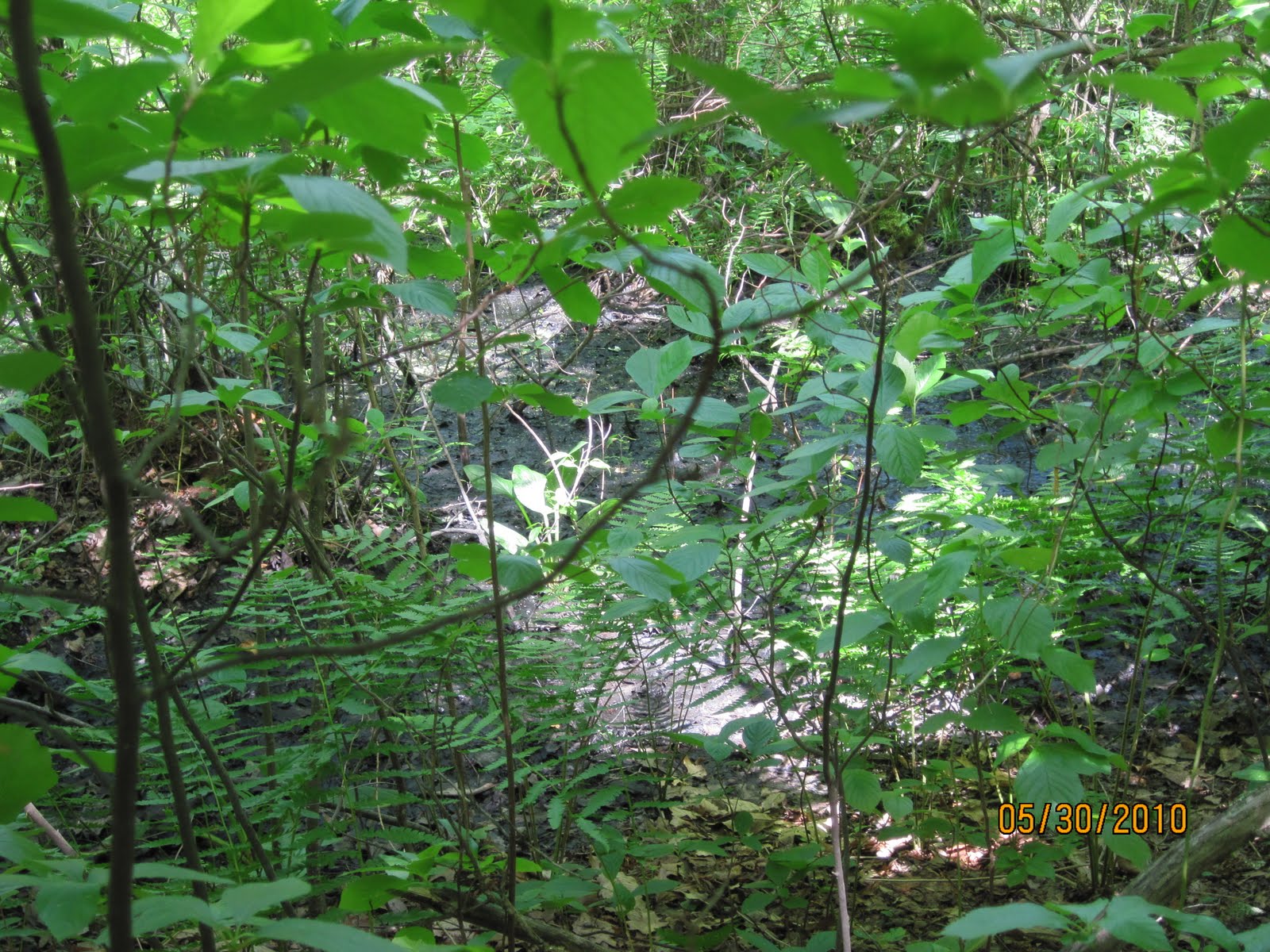 Edge of a swamp area near where I live.
Emerging catkins (long clumps of tiny flowers) and leaves on a
white oak (Quercus alba), taken in May
 Clusters of small white flowers on a
black cherry (Prunus serotina), taken in May.
 Peonies in bloom, taken in June
 Sunset from the back yard, taken in June
Subscribe to:
Posts (Atom)